Dying is Half the Fun: A Complete Guide to Short Life
If you miss the golden era of browser games like Happy Wheels, where completing a level was less about elegant strategy and more about surviving a grotesque carnival of death with your limbs intact, then Short Life is the spiritual successor you’ve been looking for. Developed by GameTornado, this incredibly popular indie platformer strips away the power fantasy of traditional heroes.
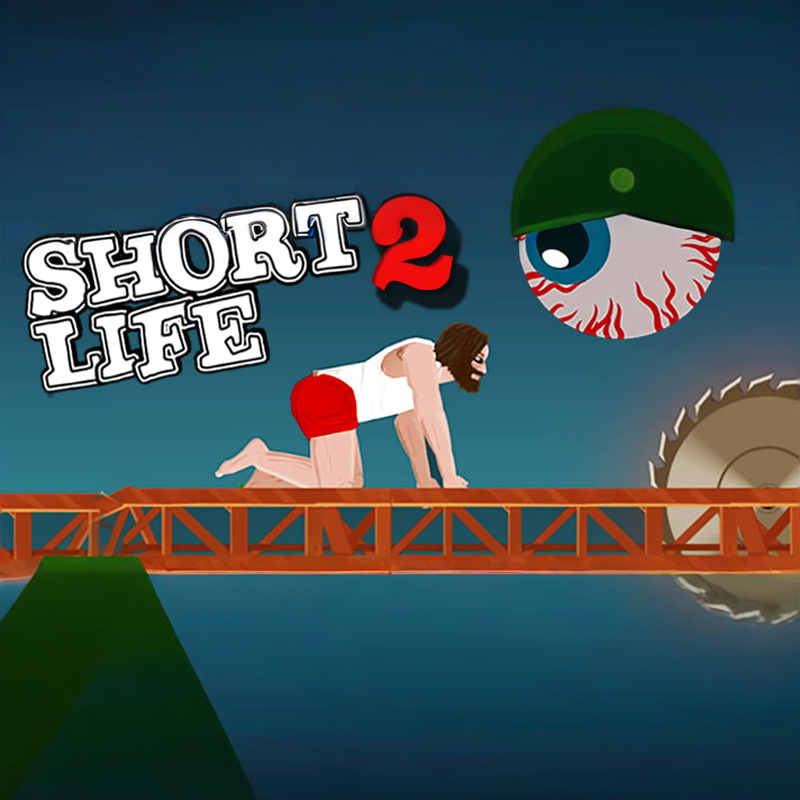
In Short Life, you don’t control an armored warrior or an agile assassin; you control ordinary, fragile people who are remarkably easy to break. The rulebook is completely thrown out the window. Your only real objective is to help your chosen character stagger, crawl, or slide across the finish line with at least a tiny portion of their body still functioning.
Whether you play the highly precise version on your desktop PC or prefer to face the carnage on a mobile screen, the title remains a masterclass in dark comedy, physics-based puzzle solving, and creative ragdoll destruction. Let’s jump into the gears, mines, and spikes of this modern classic.
1. The Core Concept: A Platformer Where You Are Fragile
At first glance, Short Life looks like a standard 2D physics platformer. You move from left to right, try to reach the end of the level, and collect up to three floating stars along the way to maximize your score and unlock new characters.
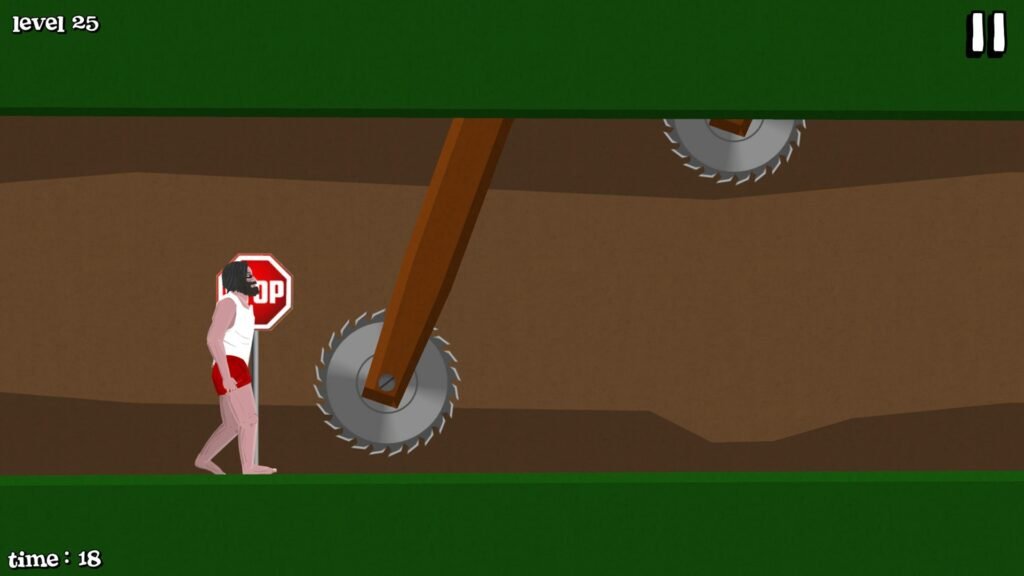
However, the game’s core hook is its uncompromising, brutally funny ragdoll physics engine. Your character reacts dynamically to weight, momentum, and impact. If you walk into a step too fast, they might trip. If you land a jump slightly off-balance, your knees might buckle, sending you tumbling face-first into whatever trap is waiting below.
The environment is a massive obstacle course packed to the brim with malicious traps:
- Giant Rotating Saws: Programmed to slice through your character the exact millisecond you mistime your stride.
- Pressure-Sensitive Landmines: Step on one, and your character will instantly vanish into a spectacular explosion of physics debris.
- Swinging Mace Pendulums: Designed to sweep across the screen, breaking bones and knocking you completely off balance.
- Wall-Mounted Harpoon Cannons: Traps that fire heavy projectiles down narrow corridors if you pass through an invisible tripwire.
2. Learning the Art of Survival
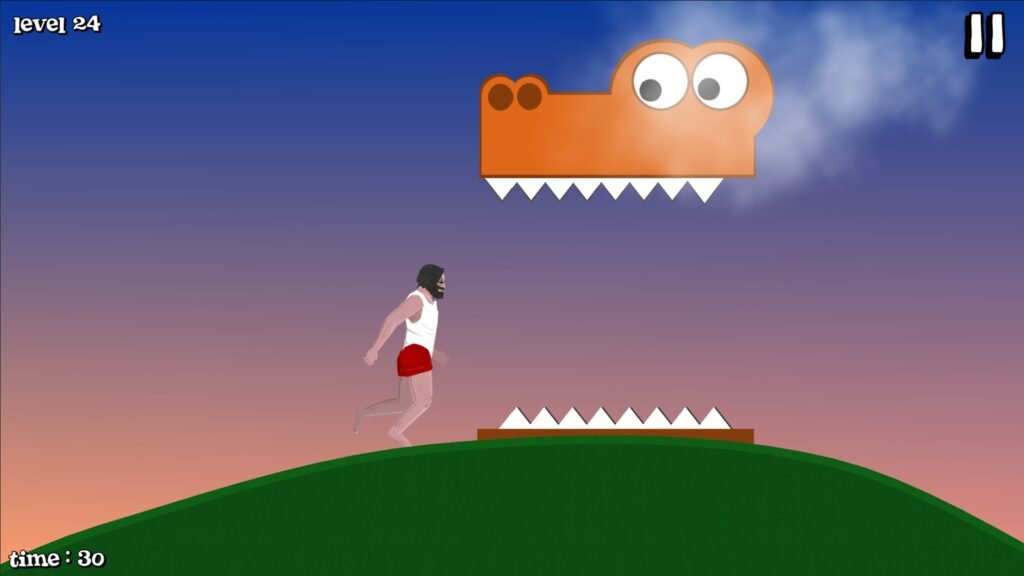
Because your character can be dismantled piece by piece, navigating the game’s dozens of levels requires an incredibly high degree of environmental awareness and caution.
The Survival Controls
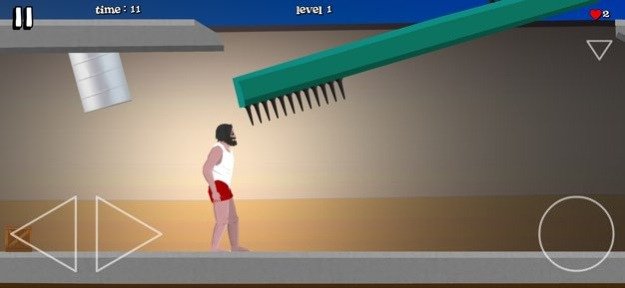
The game keeps its control scheme lean but functional. You have simple directional mapping to move left or right, a jump button to clear small gaps, and a crouch/crawl button.
The crouch button is arguably your most critical tool. When a sequence involves low-hanging spikes or firing darts, dropping flat onto your stomach and slowly crawling across the floor is often the only way to squeeze through alive.
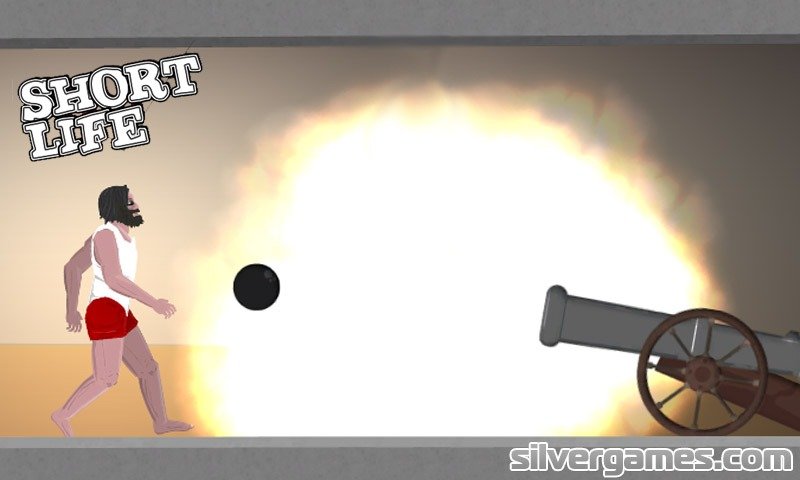
Minor Damage vs. Game Over
Unlike many platformers where a single hit results in an immediate reset, Short Life features an interactive partial-damage system. If a low spike catches your leg, your character won’t instantly drop dead. Instead, they will lose the use of that leg, forcing you to hop, limp, or literally drag yourself forward across the rest of the map using your upper torso.
As long as your head and vital trunk survive, you are still actively in the game—making for some incredibly chaotic and tense final stretches.
3. Platform Breakdown: PC vs. Mobile
GameTornado designed Short Life to work seamlessly across different ecosystems, but the experience shifts depending on how you choose to play.
The PC Experience
Playing on a desktop or laptop through a keyboard allows for the tightest possible input control. Tap-firing your directional keys makes it much easier to stand directly on the edge of a trap trigger without accidentally walking into it. The PC version also benefits from zero screen real-estate clutter, giving you a full, uninterrupted view of incoming obstacles.
The Mobile Experience
The mobile translation replaces the physical keys with custom touch-screen inputs. You can easily select between a virtual layout of traditional direction buttons or a floating digital joystick. While virtual controls inherently carry a tiny bit more slip than physical keys, the game’s portable format makes it an absolute blast for quick, short gaming sessions.
Additionally, the mobile build features a built-in Level Editor, allowing you to place traps, arrange star locations, and build your own custom death courses to test on the go.
4. Game Technical Specifications
Because the game utilizes a clean, highly optimized 2D vector art style rather than heavy 3D rendering pipelines, it can run flawlessly at high frame rates on virtually any modern setup.
System Requirement Matrix
| Technical Parameter | PC Desktop Configuration Spec | Mobile Hardware Spec (Android & iOS) |
| Primary Developer | GameTornado | GameTornado |
| Genre Category | Physics-Based / Indie / Puzzle Platformer | Arcade / Ragdoll Survival / Platformer |
| Base App File Size | ~90 MB to 100 MB | ~55 MB to 80 MB (Varies by build) |
| Minimum OS Build | Windows 7 or newer (64-bit) | Android 7.0+ / iOS 12.0 or later |
| Recommended OS Build | Windows 10 / 11 (64-bit) | Android 13+ / iOS 16.0 or higher |
| Processor Target | Dual-Core 1.7 GHz or equivalent | Mid-range Quad-core mobile chip |
| System Memory (RAM) | 2 GB RAM Minimum (3 GB Recommended) | 2 GB RAM Minimum (3 GB+ Recommended) |
| Graphics Baseline | 512 MB VRAM / DirectX 9 compatible | Adreno 610 / Apple GPU equivalent |
| Internet Status | 100% Offline Singleplayer Supported | 100% Offline Singleplayer Supported |
| In-Game Framework | Includes Level Customizer / Editors | Includes Level Customizer / Editors |
The Verdict: Why It’s Worth Your Time
Short Life has managed to pull in tens of millions of players worldwide because it doesn’t take itself too seriously. It capitalizes on the basic, raw joy of slapstick comedy. Failures aren’t frustrating or discouraging; instead, watching your character get launched across the room by an explosive barrel or pinned to a wall by an arrow is usually funny enough to make you laugh out loud.
The incredibly rapid restart loop ensures that you can jump right back into the action within a split second of a gruesome defeat, making it the perfect casual platformer. If you want a break from highly stressful competitive multiplayer loops and just want a simple, dark, and highly engaging physics puzzle to conquer, Short Life is an absolute must-play title.