Trust No Leaf: Why “Trees Hate You” Is the Breakout Rage-Game Trend of the Year
If you have spent any time scrolling through gaming streams or video feeds recently, you have likely witnessed a common, chaotic sight: a content creator staring at a colorful, cartoonish forest, screaming at a digital pixelated trunk that just punched them off a ledge.
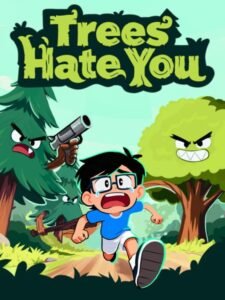
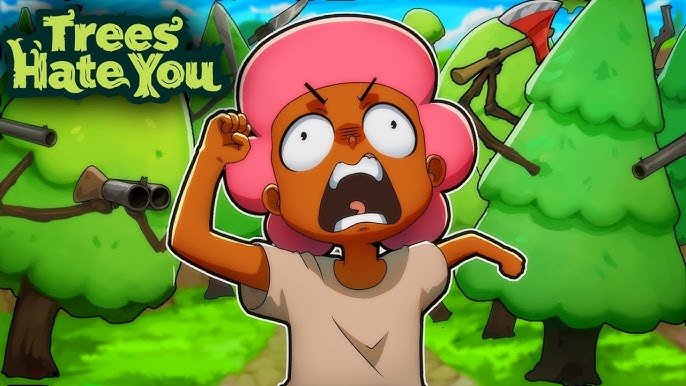
The culprit behind all this absolute madness is Trees Hate You. Developed by independent creator Tykenn, this viral title has completely upended traditional 2D platforming logic. It strips away the comforting rulebooks of game design and turns the entire natural landscape into a sentient, unyielding, and downright hilarious active combatant.
Whether you are trying to survive its brutal trial-and-error traps on a desktop rig or through its fast-growing ecosystem on mobile devices, one rule reigns supreme: do not trust the flora. Let’s look closely at how this breakout title subverts our expectations, why it’s dominating online gaming communities, and how its technical requirements shape up across platforms.
The Concept: A Picnic Gone Horribly Wrong
The premise of Trees Hate You starts off with deceptive innocence. Your character finishes up a peaceful, relaxing picnic in the woods and simply decides it is time to head home.
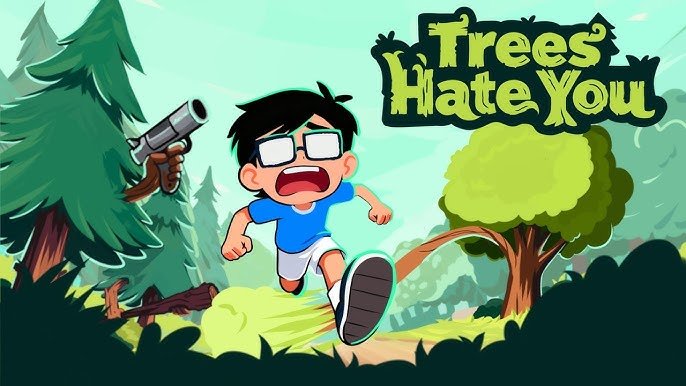
The problem? The forest has other plans. The nearby trees aren’t just inanimate map obstacles or simple scenery pieces—they genuinely, passionately hate your guts. The moment you step into their individual detection zones, the environment retaliates with cartoonish, slapstick violence.
Trunks will grow giant muscular arms to punch you, branches will drop heavy boulders or deploy hidden cannons, and seemingly safe platforms will teleport you back to the beginning of a section just as you think you’ve reached safety. The primary goal is simple: survive the walk home, clear distinct “Biomes of Bitterness,” and pray you can somehow find a logging axe along the way.
Deconstructive Gameplay: Masterclass in Rage-Bait Mechanics
At first glance, Trees Hate You looks like a simple, bright 2D platformer. However, under the hood, the core loop is built entirely around subverted expectations and spatial memory.
1. The Art of Trial and Death
In a typical platformer, you can look ahead to analyze a gap, calculate your jump distance, and execute the move safely. Trees Hate You explicitly punishes that instinct. A platform that looks solid might vanish under your feet, while an empty gap might suddenly sprout an aggressive wooden fist the millisecond you jump into it. Progression isn’t about rapid button mashing; it is an intense memory test where each sudden, funny death teaches you exactly which physical pixel triggers the forest’s anger.
2. The Weight of Momentum
The game utilizes a surprisingly heavy physics model. Your character carries distinct momentum, meaning you cannot stop on a dime. When a hidden hazard triggers, your natural instinct is to reverse directions immediately, but the built-in physics engine often forces you to slide right into the hazard anyway—heightening both the tension and the comedic frustration.
3. Smart Counter-Strategies
Despite the intentional unfairness, the game does give you mechanical tells if you look closely enough:
- Bait and Retreat: Walk forward slowly, wait for a tree’s subtle “winding up” animation to activate, and immediately tap backward. Once the tree misses its swing, it enters a very brief cooldown window where you can safely dash past.
- Watch the Canopy: Threats don’t just happen at eye level. Branches can drop projectiles diagonally or snap entirely to crush you from above.
- Identify High-Aggression Foliage: Discolored, darkened, or bright red leaves usually indicate that a tree possesses highly aggressive projectile capabilities. Approach these sections with extreme caution.
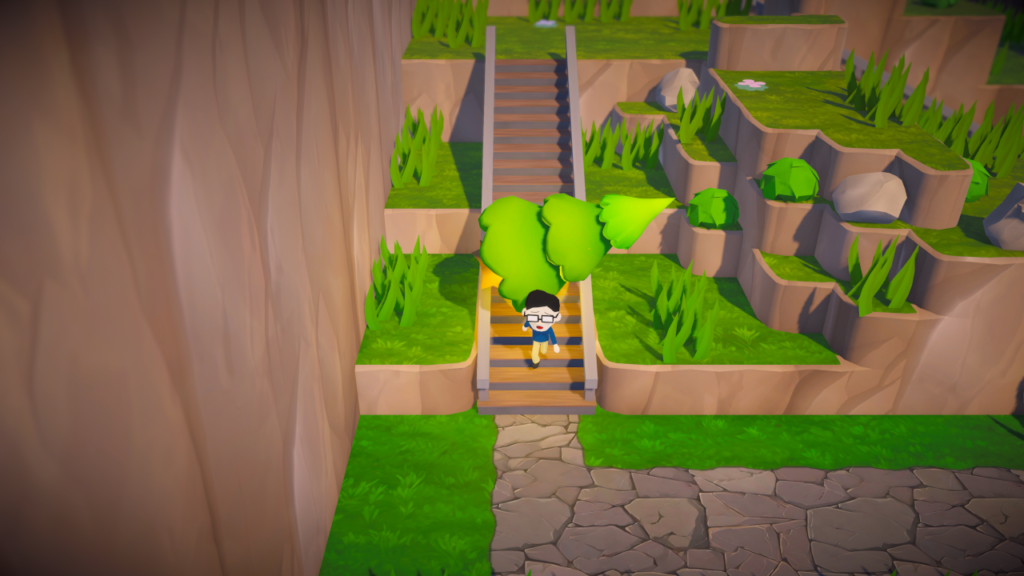
Platform Comparisons: PC vs. Mobile Sandboxes
The game’s simplistic graphical aesthetic allows it to scale effectively across vastly different hardware environments, but your choice of platform subtly changes the overall experience.
The PC Experience
Originally gaining massive traction via itch.io and expanding across major desktop launchers, the PC version remains the cleanest way to play the title. Using a mechanical keyboard or a plugged-in console gamepad offers the millisecond-level directional control required to bait out high-speed trap animations. Furthermore, running the game on a computer allows for higher, uncapped frame rates, ensuring that the chaotic, physics-based debris animations look incredibly crisp.
The Mobile Experience
The mobile adaptation takes the core trial-and-error level designs and packages them into a highly portable format. To bridge the gap between physical inputs and glass screens, the developers introduced a simplified on-screen virtual joystick and oversized tap buttons for jumping and immediate stage resets. Ground and lighting textures are slightly streamlined to prevent smaller mobile processors from running hot, making it an excellent, lightweight game to pass the time while on a commute.
Technical Specifications & Hardware Requirements
Because the game engine relies heavily on dynamic trap triggers and physical object interactions rather than heavy photorealism, it is highly optimized for older systems and mid-range mobile devices alike.
Game Specification Box
| Attribute | PC Hardware Requirements | Mobile Hardware Requirements (iOS/Android) |
| Developer / Publisher | Tykenn | Mobile Adaptations / Authorized Ports |
| Genre | Indie Precision Platformer / Comedy / Rage Game | Puzzle Adventure / Action Survival |
| Average File Footprint | ~1 GB Free Space | ~150 MB to 200 MB (Varies by build) |
| Minimum OS | Windows 10 (64-bit) | Android 9.0+ / iOS 15.0 or later |
| Recommended OS | Windows 11 (64-bit) | Android 13+ / iOS 16.0 or higher |
| Processor Target (Min) | Intel Core i3 or AMD equivalent | Quad-core mid-range mobile processor |
| Processor Target (Rec) | Intel Core i5 or AMD Ryzen equivalent | Snapdragon 700-series / Apple A13 Bionic or better |
| System RAM | 4 GB Minimum (8 GB Recommended) | 3 GB RAM Minimum (4 GB+ Recommended) |
| Graphics Hardware | Intel HD Graphics 4000 / Dedicated GPU Rec | Adreno 610 / Apple 4-Core GPU or equivalent |
| Network Status | 100% Offline Singleplayer Supported | 100% Offline Singleplayer Supported |
Final Thoughts: The Ultimate Streaming Phenomenon
Trees Hate You works beautifully because it leans completely into its own identity as a piece of interactive comedy. It doesn’t pretend to offer a deep, emotionally moving story or groundbreaking triple-A mechanics. Instead, it takes a simple, universal joke—that nature is actively plotting against you—and executes it with flawless slapstick timing.
The game’s real magic lies in how it turns frustration into entertainment. Watching your character get launched into orbit by a deceptive oak tree is genuinely funny, and the incredibly fast reset loop keeps you saying “just one more try” for hours on end. Whether you are playing on a dedicated PC setup or tapping through levels on your smartphone, it remains one of the most uniquely addictive, hilarious, and rage-inducing experiences available this year.